It is a long-standing joke in our family that one of my go-to sayings as a parent is:
“Is it kind, caring or necessary?”
It is the sort of question that can be deployed at any moment. Before saying something unhelpful, making a particularly sarcastic observation, or announcing an opinion that perhaps would have been better left inside one’s head, there is always the opportunity to pause and ask yourself those three little questions.
Is it kind?
Is it caring?
Is it necessary?
It is not a bad philosophy to live by, really. Imagine how much better the world might be if we all took a moment to consider the impact of our words before releasing them into the atmosphere. Social media would probably need to close down within a week, but that might not be entirely a bad thing?
I have always believed in kindness. Not the performative sort, where somebody makes sure everyone knows about their generosity, nor the kind that comes with conditions attached. I mean genuine kindness. The little things we do for one another, often without thinking, which make somebody else’s day a little easier, lighter or happier. But the older I get, the more I have come to realise that kindness is not quite as straightforward as it sounds.
Because while I absolutely believe the world needs more kindness, I am increasingly uncomfortable with the way the phrase “be kind” can be used, and sometimes misused, in our society. And perhaps the question needs a little updating. Is it kind? Is it caring? Is it necessary?And is it true?
The strange business of being human
I would absolutely hate to be famous. I cannot imagine having every word you have ever said, every mistake you have ever made, every relationship you have had and every questionable fashion decision from 1992 available for public inspection. Imagine having a perfectly ordinary bad day and finding yourself having gone viral and the subject of national discussion. Imagine a comment you made years ago being dragged out of the archives, stripped of context and presented as definitive proof of your entire character. Most of us have said things we regret. We have all made mistakes. We have all had moments when we were not the best version of ourselves. Thankfully, most of us get to do that without a thousand strangers on the internet forming a committee about it.
The treatment of Caroline Flack remains a troubling example of the way intense press scrutiny and public commentary can surround a person. More recently, the extraordinary level of media attention directed at Jason Arday has raised difficult questions about how public figures are scrutinised, how narratives develop and where the line lies between legitimate investigation and relentless personal exposure. Now, I am not suggesting that people in the public eye should be exempt from criticism. Far from it. Being famous, influential or successful does not make somebody immune from accountability. Nor should questions about someone’s conduct or professional work automatically be dismissed as bullying. But there is a difference between asking legitimate questions and turning a human being into a public spectacle.
There is a difference between reporting something in the public interest and pursuing a person relentlessly because we know it will generate clicks, outrage and another delicious helping of online drama. And there is a difference between wanting answers and enjoying somebody else’s downfall. I find that last distinction particularly uncomfortable. When did we become so comfortable with watching people being torn apart? We press the heart button to build someone up, celebrate their achievements and tell them how wonderful they are. Then, sometimes almost overnight, we turn on them. Suddenly, the same person is a villain, a fraud, a monster or a person whose entire existence must be dissected and condemned.
The internet can be an extraordinary place for connection and support. It can also feel like a particularly bloodthirsty Roman amphitheatre, except the lions have Wi-Fi and several thousand people are live-commenting on the entertainment. And before anyone suggests that the worst comments are probably all bots, perhaps some are. Perhaps some people deliberately provoke others because outrage generates engagement. I genuinely do not know how many comments are written by people who mean what they say, people trying to get a reaction, or automated accounts. But the possibility that some of it is manufactured does not make the overall culture any less troubling. The words are still there. Other people still read them. And, somewhere among the likes, shares and laughing emojis, we risk normalising the idea that cruelty is acceptable when directed at someone we have decided deserves it.
You don’t have to like someone to recognise their humanity
The murder of Ann Widdecombe brought this into particularly sharp focus for me. There are people whose views I strongly disagree with, whose principles I do not share and whose opinions I find deeply difficult to understand. Ann Widdecombe was one of them. But I would never have wished harm upon her. I would never have wanted a hair on her head to be harmed, let alone for her to be murdered. And seeing people go online to express happiness that she was dead was profoundly disturbing. You do not have to agree with somebody. You do not have to admire them. You do not even have to feel personally sad about their death. But surely there is a difference between disagreeing with a person’s views and celebrating their murder? We should be able to hold two thoughts in our heads at once. We can believe that someone’s views were harmful, challenge those views and explain why we disagree with them, while also recognising that they were a human being who did not deserve to be murdered.
Compassion should not be reserved exclusively for people who vote like us, think like us, look like us or share our values. Otherwise, is it really compassion? Or is it simply affection for people we already agree with? I worry that we have become so accustomed to viewing the world in opposing camps that we sometimes forget the most basic principles of decency. Its not about being left or right, its about humanity.
We are allowed to disagree. We should challenge ideas, call out prejudice and oppose policies that harm people. We should be able to have robust, uncomfortable conversations about things that matter. But disagreement does not require dehumanisation. And kindness does not require agreement.
When kindness becomes a problem
Here is where I find the whole subject more complicated. Because although I believe wholeheartedly in kindness, I am not convinced that “be kind” is always the right answer.
Sometimes the phrase is used to shut people down. Sometimes it is used to discourage difficult questions, protect reputations or make the person raising a concern feel unreasonable for having raised it in the first place. Sometimes it becomes a way of saying, “Please stop making me uncomfortable by talking about something I would rather not discuss.” And that is not kindness. It is avoidance dressed up as virtue.
There are times when we absolutely must be willing to make people uncomfortable.
Credible allegations of misconduct need to be investigated. Organisations need to be held accountable. Harmful behaviour needs to be challenged. People who have experienced abuse, discrimination or mistreatment need to be able to speak about what happened to them without being accused of being unkind for upsetting the person they are talking about.
This matters particularly for women and girls. How many times have girls been encouraged to be nice, not to make a fuss, not to embarrass someone, not to upset anyone, not to be difficult? How many times have women been expected to manage other people’s feelings at the expense of their own comfort, safety or dignity? If being kind means staying quiet when somebody has crossed a boundary, then I think we have misunderstood the concept rather spectacularly. Kindness should never require someone to tolerate mistreatment. It should never be used to make a person feel guilty for speaking out. And it should certainly never become a convenient way of protecting someone from the consequences of their own behaviour.
There is a difference between being deliberately cruel and telling somebody something they do not want to hear. There is a difference between publicly humiliating someone and holding them accountable. And there is a difference between gossip and asking legitimate questions about matters that affect other people. We need to retain the ability to distinguish between them.
Accountability and compassion are not opposites
The story of Jason Arday illustrates how difficult these questions can become. The allegations and scrutiny surrounding his academic work and personal story became the subject of intense media coverage. Investigation did not uphold allegations of plagiarism.
I do not know what part, if any, the media scrutiny played in his death, and I would not presume to claim that I do. But I do think the intensity of the coverage, the public commentary and the way a person can become a symbol onto which all sorts of wider anxieties are projected deserve serious reflection. We should also be able to question whether the volume, tone and relentless repetition of coverage are proportionate, fair and humane. Those things are not mutually exclusive.
The same principle applies to journalism more broadly. Investigative reporting can be essential. It can expose wrongdoing, give people confidence to come forward and challenge organisations or individuals who might otherwise escape scrutiny. Sometimes, the uncomfortable story is the necessary one. But the fact that scrutiny is necessary does not mean every form of scrutiny is justified. Public interest is not the same as public curiosity, and the fact that people are clicking on a story does not automatically make every detail of somebody’s life fair game. We need a press that can investigate properly, challenge power and hold people accountable. We also need a society willing to question sensationalism, disproportionate coverage and the temptation to reduce complicated human beings to simplistic headlines. Kindness should not silence accountability. Accountability should not excuse cruelty. Surely we can insist on both.

Some very unkind people are capable of doing kind things
And then there is another uncomfortable truth. Not every apparently kind act is necessarily a reflection of a genuinely kind person. People can do good things for all sorts of reasons. Sometimes it is pure generosity. Sometimes it is about reputation, recognition or wanting to be seen in a particular way. Sometimes our motives are mixed, because humans are complicated creatures and rarely fit into neat little boxes.
Jimmy Savile is an extreme and horrifying example of how a public reputation built partly around charity work could coexist with the abuse of vulnerable people. His public-facing generosity did not make that abuse any less appalling. If anything, more sick. I have wondered whether the charitable work was a disguise, an attempt to offset guilt or something else entirely. Obviously, I cannot know, and I am in danger of wandering into amateur psychoanalyst territory here, so I shall step away from the imaginary couch.
But the wider point remains. A person can do something kind without being a kind person overall. A public reputation for generosity does not prove someone’s character. And a collection of charitable achievements cannot excuse abuse or other wrongdoing.
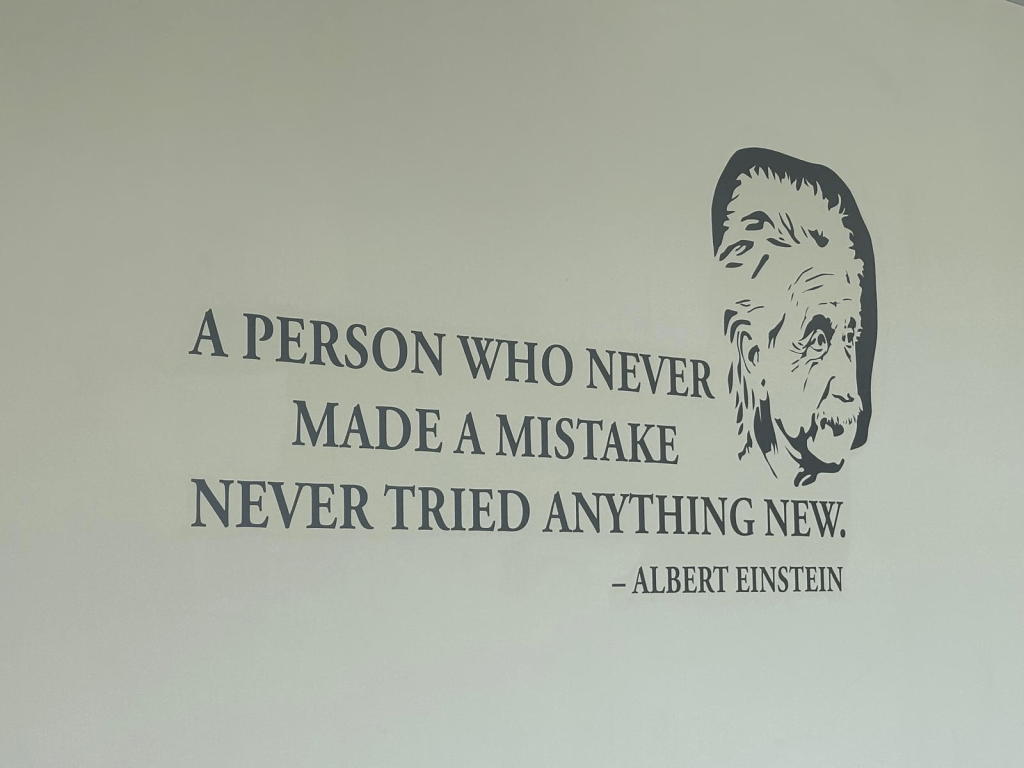
Equally, somebody making a mistake or behaving unkindly on one occasion does not automatically mean that everything about them is terrible. David Beckham is a good example of this. In 1998, he made a mistake on a football pitch, was sent off against Argentina and became something of a national villain overnight. The press and public piled on, as though one poor decision somehow told us everything we needed to know about him as a person. It was a mistake, and he had to live with the consequences, but it didn’t mean that everything about him was terrible. Nor did it erase his achievements, his talent or the other things he would go on to do. We can acknowledge that someone has got something wrong without deciding that they are wrong in every possible way. We can criticise an action without condemning an entire human being. After all, most of us would hope to be judged on more than the worst thing we’ve ever done. And I suspect quite a few of us would be grateful if our own worst moments hadn’t been broadcast to the nation on the six o’clock news.
Perhaps we need to become a little less obsessed with deciding whether people are entirely good or entirely bad. Perhaps we need to look more carefully at what people do, the impact of their actions, how they respond when challenged, and whether their behaviour consistently reflects the values they claim to hold. Kindness is something we need to keep practising.
The ordinary magic of kindness
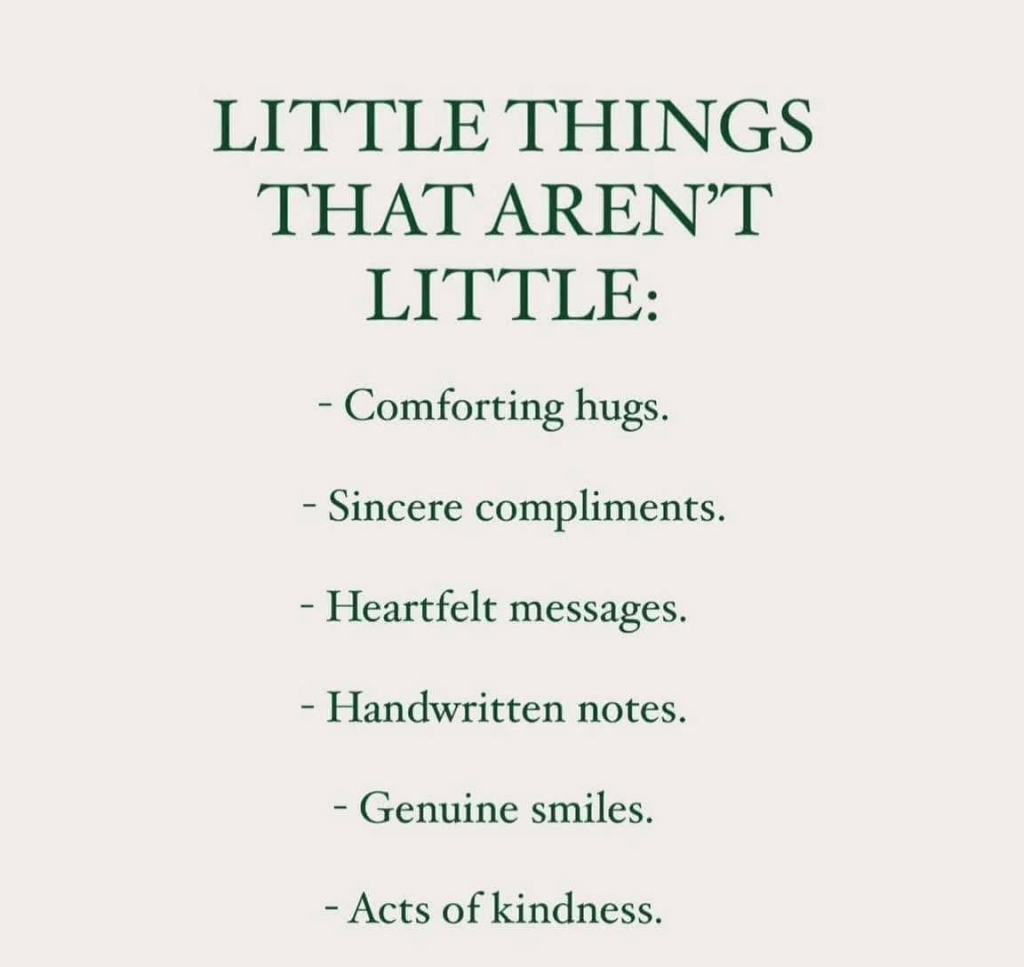
Now, after all that, I must return to the fact that I really do love kindness. I love random acts of kindness. I love doing them, and I have been the recipient of some genuinely wonderful ones. Sometimes they are big things that you remember for years. Sometimes they are tiny gestures that might not even register for the person doing them but make an huuuuuge difference to the person receiving them. A stranger letting you go ahead in the Aldi queue when you have 3 items and they have a full trolley. Your child offering to make you a cup of coffee when you are crazy busy with back to back teams meetings. A message from a friend who has remembered that you have something difficult coming up and wants to know how you are doing. Someone noticing that you are struggling and quietly offering a hand, without making you feel incapable or indebted. A genuine compliment. An unexpected little present. A lift when you need one. A thoughtful message or flowers that arrives at exactly the right moment. These things matter.
And they do not need to be expensive, elaborate or Instagram-worthy. In fact, some of the loveliest acts of kindness happen precisely because nobody is performing for an audience. They are my favourite. There is research to support the idea that these small acts can make a difference to wellbeing and social connection apparently. That does not mean kindness is a magical cure for every problem, or that a cup of coffee will resolve the structural inequalities of modern society. (Although, coffee definitely it might help me feel temporarily more optimistic! It does mean that our everyday interactions have value.
Kindness can create warmth between people who already know each other. It can build connections between strangers. It can remind someone who feels invisible that they have been noticed.
And it can create a ripple effect.
Someone does something kind for you, and you feel more inclined to do something kind for someone else. You pass on a little of the generosity you received. Perhaps the person you help goes on to help somebody else. Pass it on. None of us may ever know how far a small act travels. I also think there is something particularly lovely about doing something for somebody else simply because it will make them happy. Buying a little treat for someone, remembering something they mentioned weeks ago, or choosing a gift you know they will love can be just as pleasurable as receiving something yourself. Sometimes the joy is not in the thing. It is in knowing that you have made another person smile.
Self kindness is not selfish
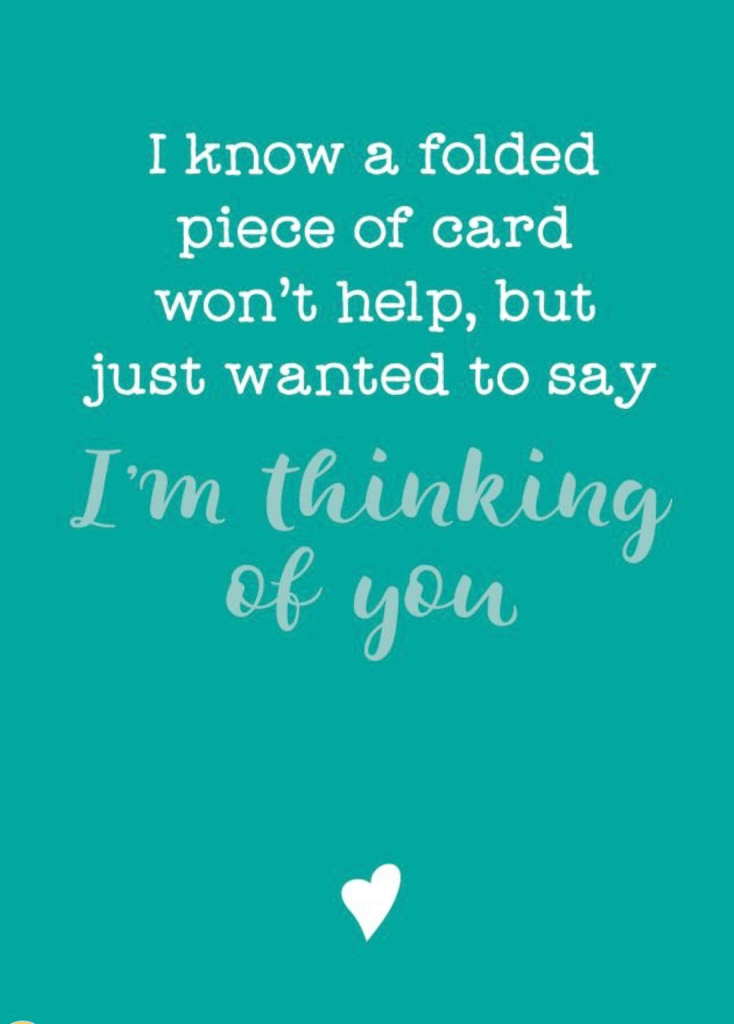
And while kindness towards others matters enormously, I think we sometimes forget that we need to extend that same kindness to ourselves. Self-kindness is not selfish, indulgent or something we should feel guilty about. It means recognising that we are human, that we have limits, that we will get things wrong, and that we deserve the same patience, compassion and understanding we so readily offer to other people. We cannot pour endlessly from an empty cup, nor should we have to earn the right to rest, to say no, to ask for help or to put our own needs first sometimes. Being kind to ourselves means treating ourselves with gentleness on the difficult days, celebrating our achievements without diminishing them, and remembering that our worth is not determined by how useful we are to everyone else. But I also believe that wellbeing flourishes through connection. We are social creatures, and our relationships, communities and sense of belonging matter, too. Perhaps the real balance is learning to care for ourselves without closing ourselves off from others; recognising that we matter, while also remembering that the people around us matter. Kindness should not be something we give away to everyone else and somehow forget to save for ourselves.
Kindness needs a little common sense
There is, however, an important qualification. You need to be kind, but you also need to be sensible and safe. For example, offering a lift to a hitchhiker might be a generous and kind thing to do. But if you are a woman travelling alone, getting into a situation that puts you at risk is not a requirement of being a decent human being. You can care about someone’s circumstances without putting yourself in danger. You can say no to a request without being cruel. You can have boundaries without being selfish. You can decide that a particular person or situation is not safe for you without being obliged to prove that your reasons are good enough for someone else’s approval. This is important because I sometimes think we present kindness as though it means always saying yes, always forgiving, always giving people another chance and always putting someone else’s needs ahead of our own.
It doesn’t.
Kindness without boundaries can become exhausting. It can leave people vulnerable to being manipulated or taken advantage of. And when we teach children to be kind, we need to teach them that their own safety, feelings and dignity matter as well. We must model kindness, certainly, but we must also model assertiveness, sound judgement and the ability to say no. Being kind does not mean being a doormat. It does not mean tolerating behaviour that hurts you. And it certainly does not mean handing over your car keys, your bank details or your entire emotional reserves because someone has made you feel guilty for having limits. There is a difference between generosity and self-sacrifice without end.
We should know the difference.
Kindness is not just about the grand gestures
The cynic might argue that kindness has an image problem. We live in a world that often rewards individual success, loud opinions and the ability to win an argument. Kindness can be mistaken for weakness, particularly when it involves listening, compromising or admitting that somebody else might have a point. But I think kindness can require considerable courage. It takes courage to apologise when you are wrong. It takes courage to give somebody honest feedback without humiliating them. It takes courage to challenge a friend when they are behaving badly, rather than simply agreeing with them to avoid an awkward conversation. It takes courage to stand up for someone who is being treated unfairly, particularly when doing so might make you unpopular.
And it takes courage to be kind to someone whose views you find deeply objectionable, without pretending you agree with them. Choosing kindness in our interactions takes courage. It is not simply a matter of being agreeable. It involves thinking carefully about how we communicate, even when the subject is difficult. That is the sort of kindness I want to practise. Not kindness that avoids difficult conversations, but kindness that makes those conversations more constructive. Not kindness that protects people from every uncomfortable consequence, but kindness that treats them with dignity while addressing what needs to be addressed. Not kindness that insists everybody must get along, but kindness that allows people to disagree without treating one another as enemies. And, perhaps most importantly, kindness that is backed up by our actions.
It is all very well telling children to be kind. But they will learn far more from watching how we speak about other people, how we treat those who cannot do anything for us, and how we behave when we are angry, disappointed or inconvenienced. We cannot ask them to show compassion while modelling contempt. We cannot expect them to respect people’s differences if we routinely mock those with whom we disagree. And we cannot teach them that everybody deserves dignity if we make exceptions whenever somebody irritates us.
Role-modelling matters. The small things matter. The words we choose when nobody is watching matter.
So, where does that leave us?
I still believe that kindness is one of the most important values we can practise, both as individuals and as a society. In a world where conflict, hostility and antisocial behaviour so often dominate, we need to remind ourselves that plenty of good things are happening, too.
People are helping neighbours. Friends are supporting one another through difficult times. Strangers are making small sacrifices to make someone else’s day a little easier. Communities are looking after people who might otherwise be forgotten. These acts rarely make the news. There are no dramatic headlines about the person who quietly checks in on an elderly neighbour every week, or the colleague who notices someone is struggling and offers to help, or the stranger who says something encouraging to someone who clearly needs to hear it. And yet, these are the things that help make life bearable, and sometimes genuinely lovely. I would like to see more of that.
I would like us to be a little more generous with our encouragement, our time and our attention. I would like us to be slower to condemn and quicker to ask questions. I would like us to remember that there is usually more to a person’s story than we can see from the outside. I would like us to stop assuming the worst about people quite so readily. But I would also like us to be brave enough to challenge wrongdoing, to speak when something is not right, and to understand that uncomfortable truths are not necessarily unkind truths.
We should be able to do both. We should be able to hold people accountable without delighting in their humiliation. We should be able to challenge someone’s views without wishing them harm. We should be able to support people who speak out without assuming that every allegation is automatically proven, and investigate credible concerns without deciding in advance that the person accused must be guilty. We should be able to acknowledge another person’s pain without dismissing the pain of someone with whom we disagree.
Above all, we should remember that kindness is not a competition in which we collect points for being the nicest person in the room. Sometimes being kind means offering a hand. Sometimes it means listening. Sometimes it means saying something difficult because it needs to be said. Sometimes it means stepping away from an argument instead of making it worse. And sometimes it means standing up, speaking out and refusing to allow the word kindness to be used as a reason for remaining silent. There is no single formula that will solve every dilemma. We have to use our judgement, pay attention to context and accept that doing the right thing is not always easy. But perhaps we can start with a pause.
Before we post that comment, share that article, repeat that rumour, join that pile-on or decide that someone deserves the worst we can say about them, perhaps we can ask ourselves a few questions.
Is it kind?
Is it caring?
Is it necessary?
And is it true?
Because not everything that is true needs to be said cruelly. Not everything that is kind is necessarily honest. And not everything that is necessary will be comfortable. We need all four questions. I will continue to ask my family the original three. It has become something of a tradition, and traditions are difficult to abandon once you have spent years annoying your children with them. But I think I will be adding the fourth.
Is it kind? Is it caring? Is it necessary? Is it true?
And perhaps one final question, for good measure: Is this the sort of world I want to help create? Because I do not want my children to grow up believing that kindness means being quiet, compliant or liked by everyone. I want them to know that they can be kind and still have boundaries. That they can be compassionate and still challenge injustice. That they can disagree with somebody without dehumanising them. That they can speak the truth without deliberately causing unnecessary hurt. I want them to understand that they do not have to like everyone to treat people decently, and that they should never have to sacrifice their own safety or dignity to prove that they are good people.
And I want them to know that the smallest acts of kindness can sometimes mean more than we will ever realise. We cannot control what everyone else says or does. We cannot make the press kinder, persuade every stranger on the internet to behave like a reasonable adult, or stop every person who seems determined to spread misery. But we can choose how we behave. We can choose to build people up rather than tear them down. We can choose to be thoughtful rather than reactive, curious rather than contemptuous, and honest without being deliberately hurtful. We can challenge what is wrong without losing sight of what is right. And we can remember that kindness is not about being nice at all costs. It is about treating people with humanity, even when things are difficult.
What the world needs now, more than ever, is not a demand that everyone agrees, smiles sweetly and avoids making anyone uncomfortable. It needs more compassion. More courage. More honesty. More accountability. More of those small, ordinary acts that remind people they matter. It needs us to be kind.
But it also needs us to be brave enough to speak when kindness is being used to silence someone, to recognise when generosity is being used as a disguise, and to understand that doing the right thing is not always the same as doing the easy thing.
So, before you press send, share, comment or join the chorus of people passing judgement on somebody else’s life, take a breath. Ask yourself the questions. And then, if you can, do something kind. Not because you want the recognition. Not because someone is keeping score. Not because you want everyone to think you are a lovely person. Just because you can make somebody else’s day a little better. And surely, in a world that can sometimes feel determined to do the opposite, that is a rather good place to start.