On Saturday, I went to a Radical Book Fair and attended a workshop entitled Community Is the Answer.
A friend had rather brilliantly observed that the book fair sounded like a very middle-aged, very middle-class sort of affair. I couldn’t entirely argue with her. There is something quite wonderfully self-aware about gathering in a room to discuss radical ideas, probably while wearing comfortable shoes and thinking about what might be for tea.
But radical ideas are worth discussing. And community, it turns out, is something we probably need rather more of. On arrival, we were each given a piece of paper with two questions on it:
Do you still have hope?
And do you think change is possible in the current climate?
Two deceptively simple questions. The sort that look perfectly manageable written down but become considerably more complicated when you actually stop to think about them.
Do I still have hope? And, perhaps more importantly, what is that hope resting on?
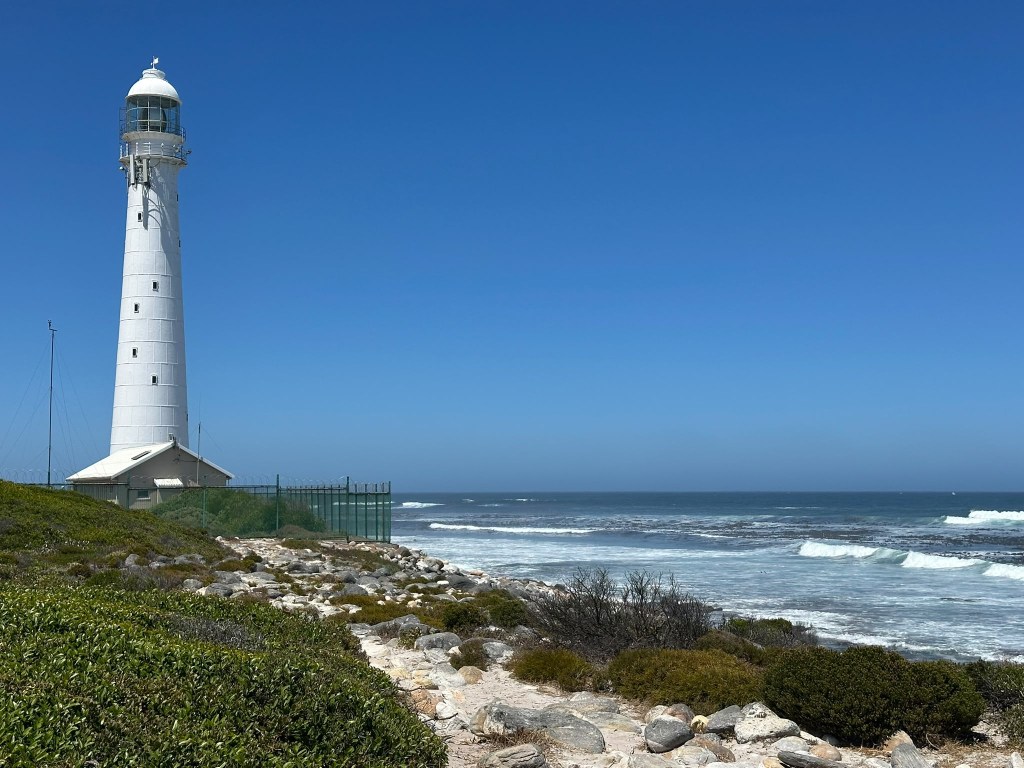
Faith and hope: same same, but different
I have a faith. It is worth stating that plainly because, if you knew me only through my everyday life, you might not necessarily know it. I am not particularly conspicuous in the faith department these days. There are no dramatic declarations from hilltops, no confident pronouncements about what God is doing, and very few moments when I feel I have it all worked out.
But faith is still there, somewhere in the background of who I am.In my late teens, in the late 1990s, I attended Bible school part-time in the evenings at His People Ministries in Cape Town. Nearly 30 years later, one lesson remains etched into my memory.
Faith is the substance of things hoped for, the evidence of things not seen.
Hebrews 11:1.
And then there is Hebrews 6:19:
Hope is the anchor of the soul.
I remember being taught that faith and hope are connected, but they are not the same thing.
Faith is about the here and now. Hope is about the future.
Faith operates in a climate of hope. You need hope to exercise faith, to trust in something you cannot yet see or do not yet understand. But you do not need to have faith in God to have hope.
Faith is a lifestyle choice. So, in many ways, is living in hope. You can have hope without believing in God. You can be an atheist, an agnostic, a person of another faith, or someone who has never given religion a second thought and still believe that the world can be better than it is. You can still work for justice, show extraordinary kindness, build community and imagine a future that looks different from the present.
And I think that matters. Because right now, I suspect a lot of us are struggling with the state of the world. The leadership on offer in so many places feels uninspiring. Deprivation and inequality persist. Justice seems frustratingly elusive. We are surrounded by conflict, cruelty, division and the sense that the people with the most power are often the least inclined to use it for the common good.
The news can feel like a relentless catalogue of things that are broken, getting worse, or being dismantled before our eyes. It is exhausting. And yet I find myself living in the absolute hope that things will change. That better is possible. That the world we have now is not the only world available to us.
I am not under the illusion that everything will work out beautifully. I don’t believe that simply wishing for something makes it happen, or that all suffering has some neat explanation if only we look hard enough for one. We live on a round, rotating organism in space. It sustains us, and we could do a considerably better job of looking after it. But the planet itself will not last for ever, at least not in any sense that makes our current existence permanent.
Perhaps hope is not about believing that everything lasts. Perhaps it is about believing that what we do while we are here matters.
The God question
Many years ago, when I was working in ITU, a nurse and I were stationed next to one another on a night shift. We were surrounded by incredibly sick patients. People who were desperately unwell, vulnerable, and dependent on the technology and expertise around them to keep them alive. At some point, she looked around at the patients and said something along the lines of, “I don’t know how people can believe in a God. Just look at this.” I understood her point. I could see what she was seeing. How do you reconcile suffering on that scale with a belief in a loving God?
But my response was quite the opposite. I looked around at those patients and thought about one in particular who had a balloon pump. Every time we needed to move that patient, I was crapping myself that the device would stop working properly. And I remember saying that I could not work there like that if I didn’t have faith in a God. We were looking at exactly the same things and reaching for different ways of making sense of them. For her, the suffering made belief difficult. For me, my faith was part of what enabled me to stand there, do my job, and face the reality in front of me. I am not suggesting that my response was better than hers. Nor do I think people who don’t believe in God somehow lack the strength to care for the sick, sit with suffering or do extraordinary things for others. Quite the opposite.
But I have never forgotten that conversation, because it reminds me that faith is deeply personal. It doesn’t always produce easy answers. Sometimes it simply gives you enough of a foundation to keep showing up.
I have been mocked for believing in something more. That’s okay. I’m not interested in convincing everyone else that they should believe what I believe. But neither am I prepared to pretend that the faith I carry is something I should be embarrassed about. I am someone who is saying I believe in God, and I am a terrible sinner, but I am trying to be a better person today than I was yesterday, inspired by having been created in the image of God and that my body is temple for his spirit. And sensing the dissidence my tattoos and chocolate eating habits give
I used to be a different kind of Christian
About 30 years ago, I wrote a testimony about my faith.I started it by explaining that I didn’t want to write for people who had already found answers to their problems. I wanted to write for people who hadn’t. That remains a worthwhile place to begin. I grew up an only child, spending long hours by myself, doing solitary things and inhabiting a world of imagination. Inwardly, I thought I had some good qualities and was an okay person. But I was frightened that other people wouldn’t like me, and I tended to assume they didn’t.
People often thought I had no problems. I had learnt to put on a happy face, while privately struggling with depression and a great deal of unhappiness. Following my parents’ separation and divorce, and the events that followed, feeling depressed had become so normal that I had to be extra depressed before I even recognised it as depression. I learnt about Jesus as a child at Sunday school, but it was later in my school life that I claimed him as my personal saviour.
At first, I was extraordinarily happy and excited. I thought everything was going to be wonderful. Then reality arrived. I still had problems. I still got depressed. I was still struggling with myself and my emotions. And this was happening after I had become a Christian. I remember writing in my testimony that I thought I was a brilliant actress. Almost nobody seemed to realise how troubled I was.
But something else was happening alongside all of that. I was devouring the Bible. I loved going to church, listening to the messages, reading about God and talking about my faith. I felt that much of the damage in my life was being repaired through the work of the Holy Spirit and the prayers of those who prayed for me. My mind began to clear. My emotions became more stable. I developed a different understanding of what real beauty was.
In that testimony, I wrote about my life as a boat in the Lord’s hands. I thought of the story in which Jesus tells his disciples to get into a boat and go to the other side. A storm comes, but the destination has not changed. I believed then that my boat was in God’s hands and that he would lead me safely to the other side. I still find something comforting in that image. But I would be lying if I said my faith today looks anything like the faith I described back then.
My days of being a strong, confident, expectant Christian are long gone. These days, I am probably one thing away from becoming the Christmas-service Christian I judged as a teenager.You know the sort. Turns up for the carols, sings a few familiar hymns, enjoys the atmosphere and disappears until next December. I had quite a lot of opinions about people like that when I was younger. Life has a way of making you reconsider your opinions. So black and white then, so much grey the older I get in more ways than one.
Where did my faith go?
I could write several blogs about the business of modern living, the pressures we carry, the difficulty of finding time and space to think, the meaning of serving God, and the things that have challenged my relationship with the church over the years.
There have been disappointments. Questions I haven’t resolved. Things I have struggled to reconcile. And the very ordinary business of getting on with life, which can quietly consume so much of our time and energy that we wake up one day wondering where the things that once mattered so much have gone.
Perhaps the simplest explanation is that, for the past 20 years, I haven’t exercised my faith very much. I haven’t nurtured it, fed it, stretched it or given it the attention I once did. If spiritual development is like developing a muscle, I have not exactly been training for a marathon. My own analogy is that my spiritual development has regressed to that of an underdeveloped child. And yet, after all these years, I still have faith in my heart. James writes about faith, perseverance, wisdom and the challenges of living out what we believe. Those themes feel much closer to where I find myself now than the certainty I once had.
Maybe the fact that I still have some faith after all this time says something about the measure of faith I was given in the first place. I sometimes think about the idea that God is a respecter of faith rather than a respecter of people. Perhaps he recognises that I am still hanging in there, even if I haven’t done an especially good job of developing what I was given. Or perhaps, if we sat down for a conversation, he would give me the disappointed-parent speech. I can practically hear it.
I’m disappointed in you.
Followed by the more pointed:
And you should be disappointed in yourself.
I’ve delivered a version of that speech to my own children on occasion, so I know how it goes.
But I am trying to put the guilt to one side.
I don’t want to spend my life measuring my faith against some idealised version of the Christian I thought I would become. Nor do I want to dismiss the things I have learnt, the ways I have changed, or the influence I might have in the spaces I occupy now simply because my faith no longer looks the way it once did.
Perhaps some of what I believe is expressed differently these days. Through the way I treat people, the work I choose to do, the causes I care about, the conversations I have, the things I challenge, and the ways I try to show up for others. That is not a claim to being especially good. I get things wrong. I am inconsistent. I have plenty of room for improvement. But perhaps faith does not always announce itself. Perhaps sometimes it is quieter than that.
Faith without works is dead. But what about works without faith?
James 2:26 gives us the familiar challenge that faith without works is dead. It is a difficult verse to ignore. If you believe something, surely it should affect how you live? Surely your beliefs should find their way into your actions, rather than remaining comfortable ideas that you carry around without ever allowing them to inconvenience you? But it also leaves me with a question.
Is work without faith a missed opportunity? Or is the work itself what matters? For years, I took part in the shoebox appeal. I pictured missionaries travelling to places I could barely imagine, handing out little boxes filled with gifts to children so young that I struggled to comprehend their lives. I thought about the excitement of a child receiving something special. I thought about the practical kindness of someone taking the time to buy, wrap and pack gifts for a stranger. And there is something genuinely lovely about wanting to give a child a little happiness. But as I have got older, I have become more uncomfortable with the questions that can surround charitable giving connected to evangelism.
What happens when generosity is used to create an obligation? When material help comes with an expectation that the recipient will listen to a religious message, or when a gift becomes a way of persuading someone who is vulnerable to accept beliefs they might not otherwise choose? I don’t want to make sweeping assumptions about every person involved or every box that has been given. I cannot know what happens in every circumstance. But I do think the questions matter. Kindness should not need to come with strings attached. And I find myself wondering whether the distinction between faith and good works is sometimes much less straightforward than we want it to be.
Does a person need to believe in God to do good? Of course not. Does an act of kindness become less valuable because it comes from someone who has no religious faith? I don’t believe it does. Does my faith give me a particular reason to care about people, challenge injustice and contribute to my community? I believe it does.
Perhaps faith should not be a badge we wear to distinguish ourselves from other people. Perhaps it should be a source of motivation, humility and courage. Perhaps the point is not to ensure that everyone knows why we are doing something good, but to do the good thing in front of us.
And perhaps one of the things I need to recover in my own faith is not simply belief, but a willingness to act on it.
Hope in a world that feels broken
This brings me back to the question on that little piece of paper. Do I still have hope? Yes. I do.
Not because I think the world is in a good place. Not because I have confidence in all our leaders, or because I think justice always prevails, or because I believe that progress is inevitable.
I have hope despite all those things. I have hope because the present is not the whole story.
We sometimes talk about hope as though it means being relentlessly positive, finding a silver lining in every awful situation, or insisting that everything will be fine. I don’t think that is what hope requires of us. Hope does not require us to look at suffering and pretend it isn’t happening. It doesn’t ask us to ignore inequality, injustice, war, environmental destruction or the cruelty people inflict on one another. It asks us to hold open the possibility that things can be different.
I recently came across a piece about the problem with constantly telling people that the world is ending. The argument was that overwhelming people with messages of catastrophe can leave them feeling powerless, whereas giving people reasons to hope and a sense that their actions can matter can help motivate change. That struck a chord with me. There is a difference between being realistic about the state of the world and deciding that nothing can be done about it.There is a difference between recognising how deeply entrenched a problem is and assuming that it is immovable. And there is a difference between accepting that we cannot fix everything and believing that we cannot fix anything.
I think we lose something important when we stop imagining a better future. If we cannot imagine a world with less inequality, more compassion, greater accountability and better leadership, how do we begin to build one? If we assume that the powerful will always win, that the vulnerable will always be overlooked, and that injustice will always be part of the deal, what possible reason do we have to challenge any of it? Hope is not a guarantee of success. It is a refusal to accept that failure is the only possible outcome.
Community is the answer
One thing I took from Saturday’s workshop was the importance of community.
It feels particularly relevant when so many of us are overwhelmed by things that are simply too large for an individual to tackle alone. What can I do about global conflict? How do I challenge inequality? How can I influence the decisions of governments, corporations or institutions whose power seems so far beyond my own?
The questions can become paralysing. But community changes the scale of things. It reminds us that we are not the only people who are worried, frustrated or disappointed. It introduces us to people who care about the same things we do. It gives us opportunities to turn shared concerns into something practical. One person may not be able to transform a system. A community of people who organise, speak up, challenge, support, campaign, create and refuse to give up can begin to shift it. And community does not have to mean that we all agree.
We don’t need identical beliefs, backgrounds, politics or experiences to care about one another. We don’t need to find a shared religious identity before we can work together towards something better. Sometimes community is simply a group of people recognising that something is wrong and deciding that they would rather do something about it together than sit with their frustration alone. That, to me, is hopeful.
It is also something that people without religious faith have understood and practised for generations. There is no monopoly on compassion, justice or solidarity. Psychologists have also been exploring this relationship between hope and action. The American Psychological Association has written about hope as something more active than wishful thinking: it involves believing that a goal is possible, finding pathways towards it, and drawing strength from other people along the way. (Read Hope as the Antidote.)
I rather like the idea that hope is not just a feeling we either happen to possess or have lost. Perhaps it is something we can practise. Perhaps it can be strengthened by the people we spend time with, the things we do, the stories we tell, and the futures we allow ourselves to imagine. And perhaps the opposite is also true. Perhaps hope can be diminished when we spend all our time consuming terrible news, isolating ourselves, and becoming convinced that nothing we do will ever matter. I know which of those approaches I want to try to nurture.
Quiet hope
The thing is, hope does not always arrive as a huge, world-changing moment. Sometimes it is very ordinary. It is the beauty of autumn leaves, even as the days grow shorter and the trees begin to shed them. It is the smell of something baking in the oven. The warmth of a house when you come in from the cold. A conversation that makes you laugh when you weren’t sure you had the energy to laugh at anything.
It is writing a blog post because something has stirred a thought in you that you need to explore.
It is a handwritten note from someone who has taken the time to let you know they are thinking of you. A smile from a stranger. A friend checking in. A cat deciding that your knee is an excellent place to rest its head. It is the fact that, even when the world feels bleak, people continue to make things, grow things, care for one another, create spaces where others feel welcome and find ways to make life a little easier for someone else.
None of those things solves the major problems facing humanity. But I don’t think they are irrelevant simply because they don’t. We need the big work of challenging injustice, redistributing power, protecting our environment, improving lives and creating better systems. We need people who are prepared to take risks, speak uncomfortable truths and organise for change. But we also need the everyday things that remind us why that work matters. We need beauty. We need laughter. We need friendship. We need places where we can be honest about how hard things feel without being told to cheer up. We need to be able to acknowledge the darkness without allowing it to convince us that darkness is all there is. And we need one another. Hope is not always a grand gesture. Sometimes it is a small act that keeps us connected to the possibility of something better.
So, where does that leave my faith?
I still believe in God. I still believe there is something more than what I can see, measure or explain. I still carry the words I learnt as a teenager about faith being the substance of things hoped for and the evidence of things not seen. I still hold onto the image of the boat, the storm and the other side. But I am not writing this as someone who has conquered doubt, re-established a disciplined spiritual life, or reached some profound conclusion about what it means to be faithful. I am writing this as someone who has travelled a long way from the person she was 30 years ago, who has struggled with questions about faith and the church, who has let some things slip, and who is still trying to work out what it all means.
Perhaps I need to stop thinking of faith as something I either have in its entirety or have failed to develop properly. Perhaps there is room for a quieter faith. A faith that asks questions. A faith that acknowledges its shortcomings. A faith that is willing to learn from people who don’t share it. And perhaps there is something to be said for the fact that I am still here, still believing, still questioning, still looking for meaning and still hoping.
I don’t know that I have the answers. But I do know that I don’t want my faith to become an excuse for passivity. I don’t want to use it to dismiss the suffering of others, or to explain away injustice, or to convince myself that everything will be sorted out by someone else. If my faith is to mean something in my life now, perhaps it needs to help me engage more fully with the world as it is, rather than retreat into the comfort of what I believe will happen in the future. Perhaps faith should make me more willing to hope, and hope should make me more willing to act. Not because I can guarantee the outcome, but because I believe the work is worth doing.
Do I still have hope?
Yes. I have hope that we can do better. Hope that the world can become more just, that leadership can be more compassionate and accountable, and that people can choose solidarity over division. Hope that we will learn to care for the planet more responsibly, that we will stop treating deprivation as inevitable, and that we will become less willing to accept cruelty as the cost of doing business. Hope that communities can offer something that powerful institutions sometimes fail to provide: a sense of belonging, the willingness to listen, and the determination to stand alongside people who need support. I have hope that we can change, both individually and collectively.
Do I know that we will? No. Do I believe that every cause I care about will succeed, or that I will live to see all the changes I would like to see? Absolutely not. But surely the absence of certainty is not a good enough reason to give up hope. My faith tells me that there is more than what I can see. My hope tells me that what I see today is not necessarily what tomorrow has to look like.
And the people around me remind me that neither belief nor hope needs to remain an abstract idea. Both can find expression in how we live, what we choose to care about, and the things we do together. I may no longer be the confident young Christian who thought she knew where she was going and how she would get there. I may not exercise my faith as much as I should. I may have more questions than answers, and I may never quite become the person I imagined I would be. But I still have faith in my heart. And I still have hope.
Perhaps that is enough of a starting point. Not a promise that everything will be all right. Not a guarantee that justice will prevail or that the world will change simply because we want it to. Just a conviction that better is possible, that our actions matter, and that we have more chance of moving towards that better future when we work together. The world is a complicated, often frightening and frequently exhausting place. We cannot control everything that happens in it. We cannot rescue everyone, fix every problem or prevent every storm. But we can decide how we show up in the world we have.
We can notice the beauty in the autumn leaves. We can make the cake, write the note, check on the neighbour, support the friend, challenge the injustice, join the community and do the work that needs doing. We can leave room for doubt without abandoning belief, and we can acknowledge how bad things are without deciding they can never be better.
We can choose hope. And perhaps, just perhaps, that is where change begins. Faith and hope. Same same, but different. Both ask us to believe in something we cannot fully see. One is rooted in what I believe about God. The other is rooted in the possibility of a future that looks different from the present.

